|
Week 51 in my quest for 52 blogs this year and as its Christmas I thought I would take a random Christmas fact from my family tree and write about some families on the tree I have not mentioned before. I looked at all the members on the tree who were baptised either on 25 or 26 December. There were 23 altogether. Charles Edward RHOADES was my 3rd Great Grand Uncle and he was born in Ashby by Partney in Lincolnshire in 1824. His parents were William RHOADES and Elizabeth GRAVES who were my Great x4 grandparents. Charles had 4 brothers, John born 1821, William born 1823, Joseph born 1831 and Smith born 1833, my Great 3 Grandfather. He had 4 sisters, Betsy born 1826, Emma born 1829, Susannah born 1835 and Mary Ann born 1840. Charles married Elizabeth Payne in 1846 and I know of 2 sons born to them. The interesting fact about Charles is that like his brother, Smith he ended up farming in Sussex. I am yet to do more research into the family and discover if any more of the siblings ended up in Sussex but these 2 did. Charles, according to the census returns I found farmed at Kents Farm in Hurstpierpoint which is in West Sussex. He died in 1886 there. Charles had already set up home in Hurstpierpoint by the time of the 1851 census when Smith was still in Lincolnshire, he was a Groom in Welton Le Marsh. By 1861 Smith had followed Charles to Hurstpierpoint. However like Charles he had met and married his wife, Maria in Lincolnshire.  Image of Kents Farm, Hurstpierpoint, Sussex George Frederick TURNER and Sarah Edith TURNER were both baptised on Boxing Day, Sarah in 1823 and George in 1828. They were both born in Aldgate, London to Richard and Susannah TURNER. They were my Great x5 Grandparents. George and Sarah had 7 siblings, 4 brothers; James born 1804, my Great x 4 Grandfather, Edward born 1807 who died in 1809, Edward William born 1812 and John Richard born 1820 and 3 sisters; Sarah born 1806 died 1808, Nancy Susannah born 1816 and Margaret born 1827. The family lived in Darby Street in Aldgate, London and later Cartwright Street, Aldgate where James and Edward brought up their own families. George Frederick died in August 1830 in Cartwright Street and Sarah Edith died in June 1824, meaning that Richard and Susannah lost 4 children all under the age of 5 painting a sad picture of poor families in some of the poorest parts of London. James and his wife Eleanor DUNN married in 1826 and had 6 children, 4 of whom lived into adult life. James died at the age of 38 when he was crushed by a falling piece of wood, James was a Carman although one record stated he was a Sawyer which was the chosen job of his son James Edwin, my Great x 3 Grandfather.  Image of Aldgate, London showing Cartwright Street and Darby Street Lastly Henry STONESTREET was baptised on 26 December 1761 in Brightling, Sussex. He was my Great x 5 Grandfather and he was born to Samuel and Lucy STONESTREET along with Lucy born 1751, Harry born 1754, died 1756, Elizabeth born 1757, Samuel born 1759, James born 1763 and Ann born 1765. He married Sarah WATERS in 1783 in Heathfield and their seventh child was Ann born 1792 who married Thomas SINDEN alias WINCHESTER, who was my Great x4 Grandfather. In 1823 three of Henry and Sarah’s sons were convicted of breaking into a barn while returning home from Dallington with a wagon of wheat. The trial took place at Lewes and they were all sentenced to 14 years transportation. The three brothers departed Portsmouth, England 13 July 1824 aboard the Mangles 3 which arrived in Sydney via Teneriffe on 27 October 1824. The convict indents states Moses aged 37, William aged 29 and Levi aged 23, all from Sussex and occupations listed as Reapers. They arrived well and were forwarded to Parramatta for Distribution. The three brothers were assigned to Mr J Hassall of Parramatta. I wonder how many of those families who had their children baptised over Christmas thought about the future and where the lives of those babies would be directed. These three examples of the 23 children baptised at Christmas all ended up with very different lives, some short, some having done well for themselves and some working hard, and bringing their own children into the world. These three ancestors of mine are all work in progress, I have more research to do on all of them.  Image of the church at Brightling in Sussex  Image of the Christmas story
0 Comments
This week for #52Ancestors the theme is Traditions, so as its nearly Christmas I thought I would talk about some Christmas traditions that we have in my family. Firstly, when do you put up the Christmas decorations? When we were children, we had a tradition that they went up on the 15th December, the night before my sister’s birthday. Of course nowadays that would be considered quite late, most people seem to decorate their houses about the third week in November. In the days of my childhood very few people decorated the outside of their house though. That is quite modern and I have to say I love it. Last year we visited Westfield in East Sussex with my brother and sister in law and two nephews, it was rather spectacular. The whole village go right over the top decorating the whole village, all for charity.  Image of Westfield Christmas decorations 2021 What traditions do you have on Christmas Day itself? Do you go to Church every year? When do you open your presents? We have had temporary traditions for opening presents depending on where we were. When we were children we would have a pillowcase at the end of the bed which we would open as soon as we woke up. I don’t think it was ever that early, but my parents may disagree! We used to spend Christmas Day with my maternal grandparents, I think we would go to them up at Punnetts Town and Granny would cook Christmas Dinner. I don’t remember when we would open presents with them but I presume after dinner, it was just easier once the dinner is out of the way. Then when my grandparents died, and my sister had her three children, Christmas was often at their house or my parent’s, or sometimes my brother’s when he moved into Beechcroft. Present opening was always after dinner and after the dogs had been walked round the Windmill at Punnetts Town. Later on as my nephew and two nieces became teenagers, they didn’t want to go for a walk and so we would stop behind while the others went for a walk and my nephew would put all the presents into piles ready for opening and I would half heartedly try to stop him from guessing what his were! I don’t think any were surreptitiously opened.  Image of Christmas Day walk 2011 Nowadays we are in the second flush of young children, with my brother’s two nephews and Christmas is always at their house, Beechcroft. Presents are opened after dinner. We have never really been avid watchers of the Queen’s Christmas Day Speech, but this year I would like to see King Charles make his debut. Do you watch it? We usually put out a Christmas tea about 5 or 6ish but nobody is usually very enthusiastic about eating much. I think it is mainly for the two boys to make sure they don’t go hungry. You know what children are like, they haven’t usually eaten much Christmas dinner, unlike the adults! Christmas dinner itself has always been about all taking part in the making for my family, starters are usually my thing. We often make a chicken liver pate, or in the past when Delia Smith was the ‘thing’ I attempted her Goats Cheese tarts. I remember my other half trawling cook shops in East Sussex for baking beans, I hadn’t realised I needed to bake the cases blind until the morning I was making them. If I remember correctly, they were actually quite good. We have never been able to have the family to our house for Christmas Day as it is just too small although I always wanted the opportunity to host the day.  Image of present opening Christmas Day 2011 Lastly a fairly new tradition we have is that Boxing Day is no longer Boxing Day, it is Henry’s birthday tea. I’m not sure how much longer this tradition will remain before he doesn’t want to have tea with the family and would prefer to go out down the pub with his mates, well actually that is still some years off, but the way the years pass, it will soon be upon us! Then I imagine the adults will snooze for the afternoon in front of the TV. Each generation seem to make their own traditions, some that stick and some that do not. I wonder how many of the traditions of my childhood came from the traditions of my grandparents own Christmases. They change as fashions change and generations come and go but fundamentally in our family Christmas is about family, being together and appreciating each other and enjoying company together to celebrate a day which to my family has always been special as it is the day we celebrate the birth of Christ. Long may that remain! Happy Christmas everybody!  Image of Christmas Day at Ticehurst 2015 One of my most well travelled ancestors as mentioned last week, was Thomas Baldwin. This week I tell how he didn’t only face New Horizons once but he faced them twice in #52Ancestors – New Horizons. Thomas was born in about 1815 in Ireland, presumably in Cork where his parents Corlis and Hester were married in 1811 but any children they had have not been found in Irish records. I have his marriage certificate, he had migrated with his parents at some point, he married Margaret Morgan on 29 July 1839 in St Giles in the Fields, Middlesex. Presumably his two surviving siblings, Sarah age 15 and William (my great x3 grandfather) age 10 were there to celebrate the nuptials. In 1841 on census night he and Margaret lived in Little Denmark Street in St Giles in the Fields with their 1 year old son, Corles. Sadly Corles didn’t make his 4th birthday dying with inflammation of the lungs sometimes known as pleurisy. John was born in 1842 and Thomas in 1844, again in St Giles following by James in 1846 and William in 1849 still in St Giles. I haven’t found any more children for the couple so far. Thomas was a boot maker and we find him during the 1851 census remaining at 6 Little Denmark Street with Margaret and the 4 boys. Margaret was also from Ireland. An 1861 census could not be found for any members of this family so I searched wider than England and they were found in the Township of Emily in Victoria, Canada. Somewhere between 1851 and 1861 they decided to move from England and on to Canada to make a better life. I would like to investigate some possible theories as to why they moved on, were there other babies born and died in the intervening years that I have not found? I imagine the living conditions in Little Denmark Street would not have been great at that time for a shoemaker. Charles Booth’s poverty maps show St Giles as being a mixed area, some comfortable whilst others were poor.  Image of Church at St Giles in the Fields By the time of the 1871 census the boys had become farmers and all still appeared to remain at home with their parents in the Township of Keppel in Ontario where the family had settled. Thomas was still a shoemaker. Thomas died on 16 May 1885 in Keppel at the age of 68 of 2 weeks of Asthma. One day I would like to investigate further the chest problems that many members of my Baldwin family seem to have succumbed to on their death certificates which would be prevalent amongst the poorer classes in those areas of Middlesex and London during the Victorian period. I think I have observed many but I need to research it further. Families have been found for Thomas who married Margaret Connell in 1872, she was born in Canada and James who married Margaret Brady in 1874 and she was also born in Canada. James and Margaret had 11 children including James born in 1884 in Grey, Ontario who has his name written on the Menin Gate in Ypres, France, which means his body was not found to bury in a grave. He was killed on 30 October 1917, age 33. I found a copy of his attestation papers which state he was a Methodist and he enrolled in Calgary, Canada on 4 April 1916.  Image of James A Baldwin's name on the Menin Gate Memorial in Ypres I am sure that James wouldn’t have travelled to Europe to fight alone, and I imagine there would have been brothers or cousins with him. Attestation papers were also found for Edgerton Baldwin born in 1891, one of James’s younger brothers who also signed up in 1916 but in Hepworth, Ontario. He survived the war and travelled back to Canada in 1919. A cousin, Herbert Baldwin, son of Thomas and Margaret Connell born 1874 also has attestation paper which show he signed up in 1916 and was already married to Lilly. A photo was found for him in his uniform, the only photo I have of a WW1 forebear. I would like to research this family further, I am sure there must be many stories to find in the wilds of Canada.  Image of Herbert Baldwin in uniform, WW1 This week’s theme for #52 Ancestors is Overlooked. My subject this week is one that those of you who are researching your own family history may understand. Do you have a part of your family tree research that isn’t as well researched by yourself as other parts of the tree? I have! My Baldwin side of the family has been sorely under researched. There are various reasons why we might favour a certain part of our tree, it may be more contacts, it’s easier to find ancestors, or perhaps we prefer them. For me the Baldwins have proved more difficult, I can find very few people who are also researching this part of my family tree. My DNA results back this up, so far I have found no matches with my Baldwin part of the family. The Pilbeam side are extremely well represented. The Pilbeams were also based in Sussex, I know the area, the records offices are close by and there are loads of sources of Sussex records online. The Baldwins, came from Hackney and other parts of London and Middlesex, an area I don’t know at all and records have been more difficult to find. Also the fact that Corles Baldwin, my Great x 4 Grandfather came from Ireland which is much more difficult to research is a large brickwall to my research.  Image of Reuben Baldwin, my great grandfather However that is not to say that the Baldwin family are not interesting. They are! Much better travelled than the Pilbeams and coming from the City of London as they did, into which people moved from all parts of the country, the families that married into the Baldwins come from Devon, Norfolk, Ireland and Lincolnshire. Part of the Industrial Revolution of the 19th Century when poor agricultural families moved to cities for the chance of a better life. Although sadly the parts my family were found in, I’m not sure they found a better or more prosperous life! I have only found one family so far, the Turners who were in London in the 18th century, living and working not far from the tower of London. My Baldwins were dockers working on the River Thames, working with tea and sugar and I need to learn more about where and how and what this involved. During 2023 I would like to spend more time on the Baldwins. Meeting Dad’s cousin for the first time has spurred me on to find out more information to share with her, the family she never knew she had. Particularly the 20th century Baldwins, another area of research I often overlook, preferring to look further back in time. Sometimes this is easier than 20th century research which is often hampered by lack of resources because of records being closed for up to 100 years like the census.  Image of St Patricks Bridge in Cork City, Ireland Thrulines on my Ancestry DNA results is interesting, they come up with potential ancestors based on the research where available for your matches, the couple of Baldwin matches I have, suggest a mother for Corles Baldwin, I don’t know how correct it is but it is definitely worth checking out. I will also continue to search the British Newspaper Archive for useful and interesting articles that mention my Baldwins like the one I related a few weeks ago about my Dad’s uncle, William who died in an accident at Green Brothers Factory in Hailsham in 1950. It is amazing what nuggets of information about our ancestors lives can be found from newspapers. Next week’s blog I am writing about the research I have carried out on Thomas, eldest son of Corles and Hester whose family didn’t stay in England but travelled the Atlantic and settled in Canada. I have found at least one of his grandsons who has his name on the Menin Gate memorial in Ypres. But more of that next week. 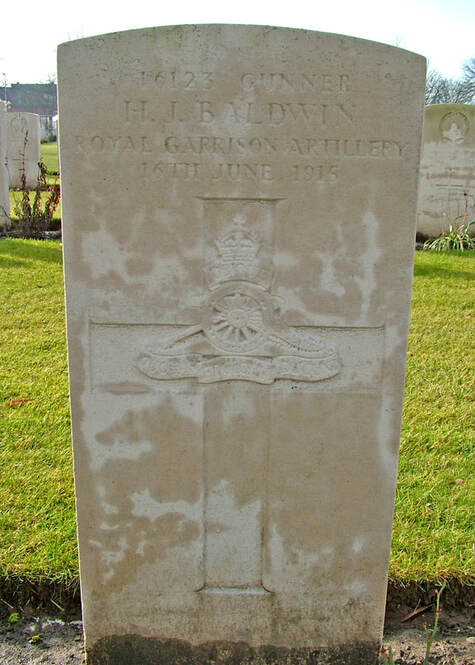 Image of the grave of Henry James Baldwin my great x2 granduncle who died during WW1 For this week’s #52Ancestors I am returning to Hannah Oliver, who was last seen in April when I told the story of how her husband Richard Message was transported to Australia. Negatives - Richard Message transported - Sussex Genealogist The theme is Wrong side of the Law but Hannah was on the right side of the Law in this instance. Hannah remained in Sussex, she had an illegitimate daughter, Elizabeth Harriet in 1822 who married John Funnell my great x3 grandfather in 1840. For the 1841 census Hannah was living at Alehouse Farm in Bodle Street Green with John Catt, an Agricultural Labourer. By the time of the 1851 census she was still living with John Catt, he was a widower, she was a widow and by the 1861 they were in Warbleton, not far from the Three Cups Inn, which was being run by John and Elizabeth Funnell. She was described as John Catt’s Housekeeper and one of her granddaughters, Caroline Funnell appeared with them.  Image of part of the newspaper article relating the story I recently found this interesting story in a local newspaper in 1867 involving them both: Mary Jane and John Lavender of Dallington were charged on remand, the former with stealing, the latter with receiving 12 sovereigns, 1 half sovereign, 1 sixpence, 1 box and 2 books from the house of John Catt in Warbleton on 19 May. Mary Jane was the 8 or 9 year old daughter of John Lavender, who was out on bail. Mary Jane was brought into the court sobbing. Hannah Message, housekeeper to John Catt, deposed that John Catt on last Sunday week had 10 sovereigns and 5 half sovereigns in a small box kept in a large chest in his bedroom. On the Monday they had gone. Mary Jane Lavender had been living at the house for some time, her father lived about a mile away and she had no mother. Her brother George Lavender had come for her at about 10 o’clock, she had been up and down stairs several times. Charles Catt, John’s son corroborated Hannah’s evidence. Charles Catt had talked to Mary Jane Lavender and sent her to talk to Mrs Funnell (Hannah’s daughter) and after that had visited the prisoner, John Lavender who admitted the girl had given him the two books and sixpence but nothing else.  Image of the Three Cups Inn, nearby to where John and Hannah were living Elizabeth Harriet Funnell was called to the stand and reported that she had gone to her father’s John Catt hearing some money had been lost. Her brother had sent the little girl in to talk to her. She admitted to Elizabeth she had taken the money and had given it to Emily Crouch for a patch piece. Emily Crouch, aged 13 had admitted that Mary Jane had given her a little box for which she had given her a piece. (piece of material to patch a hole). Various local witnesses were called who all agreed that Mary Jane had given her father a sixpence. PC John Simmons had been called to the house on the morning of Monday 20th May and had spoken to Mary Jane who admitted she had taken the money and shown him where from. The box she had given to Emily Crouch. John Lavender was questioned by the PC and only admitted to the sixpence, nothing more. He had searched the house but did not find the money. The girl was remanded for a week and the father for a fortnight on his own recognizances. This newspaper report as you can see is gold dust to a genealogist, it mentions neighbours and their families and where they lived. It also gives some idea of the amount of money John Catt had which I have to admit is more than I would have imagined he would have. But to me this gives a clue to Hannah’s circumstances. I always had this theory that there was more to the relationship between Hannah and John Catt than master and housekeeper. They remained together for at least 3 decades to her death. All the time she presumably imagined her husband was still alive in Australia and she remained married. In this article, Elizabeth Harriet referred to John as father and to Charles Catt as brother, which suggests a closeness more than daughter of housekeeper and master. But Elizabeth’s two marriage certificates put Richard Message as father on the first, impossible as we know, he had been in Australia since 1807, and she wasn’t born until 1822, and blank on the second certificate. It most certainly is an intriguing story and Hannah remains one of my favourite ancestors. I continue to research this one!  This week’s #52 Ancestors theme is Tombstones and I thought I would write more about Jonathan Harmer (1762-1849) who I mentioned last week and his terracotta grave decorations. Jonathan's father (Jonathan Harmer 1723 - 1800) was a Stonemason living at Portland Square, Heathfield, Sussex and on his death in 1800 he bequeathed to his two sons 'all such Portland and other stone, together with my working tools and utensils belonging to the trade of stone mason, brick layer and land surveying books.'  Image of a gravestone featuring a Jonathan Harmer Terracotta Jonathan who had emigrated to America in 1796 returned to Heathfield and took over the family business which he ran until 1839 when it was taken over by his sons. In the difficult times of the 19th century, those living locally who were poor could only afford a simple headstone and Jonathan, taking pity on these people came up with the idea of ornamental bas-relief terracotta memorial plaques from the local red clay from Heathfield Park, sometimes combined with paler imported clay. These plaques were affixed to the gravestone and many have lasted for 200 years and you can still see them in a number of Sussex graveyards. To keep costs down he made his own clay moulds and could therefore turn out many identical panels rather than each being carved individually. He devised a method where he cut the outline of the terracotta into the stone, then cut about 3/4 inch deeper into the stone creating a cavity. The terracotta plaque of the same or slightly thicker depth was made, then the plaque was glued into the cavity using a mortar.  Image of a cherub terracotta and a possible recess above where the terracotta has been lost There are different designs varying from baskets of fruit and flowers, cherubs, urns of flowers and angels. They were fashioned in the same way as the marble stones he carved. Customers could also choose their own designs and some individual designs still remain alongside the more usual ones in graveyards around the locality. Churchyards where his work can still be seen: Hailsham, Cade Street, Mayfield, Framfield, Brightling, Burwash, Warbleton, Herstmonceux and Salehurst. Other Plaques can be seen at the Brighton Museum and the Anne of Cleeves House Museum in Lewes. Although it is reputed that Jonathan's method died with him in 1849, his son, Sylvan has been said to have carried on the manufacturing of the terracottas after Jonathan's death although in the 1851, 1871 and 1881 census records he is recorded as being a Land Surveyor. I have been unable so far to find any records of any of Jonathan's grandsons taking over the business, however, Sylvan's gravestone dated 1884 at Old Heathfield Churchyard is the latest terracotta I have found, therefore someone must have carried on the tradition for a little while at least.  Image of the terracotta on Sylvan Harmer's gravestone at Old Heathfield  Image of the gravestone of Sylvan Harmer 1884 This week’s #52Ancestors theme is Ghost Story and I decided to share my own ghost story with you. I’ve always been a bit sceptical about ghosts and ghouls and things that go bump in the night but this curious incident might have changed my mind a little, then again it may have been just my imagination, and apologies if you have heard this story before. When I started my family history research 20 years ago I spent a couple of years visiting local churchyards searching for the graves of my ancestors and one gloomy October afternoon in 2007 I visited Chiddingly Church.  Image of Chiddingly Church I walked round the graveyard looking for Funnell graves and despite having walked around the graveyard a couple of times I could not find any at all. There were supposed to be loads of Funnells living in the Chiddingly in the early 1800s but I couldn’t see a single Funnell grave. You can tell that by the series of photographs I took on that afternoon, a squirrel, some fungi and some Jonathan Harmer terracottas. I had walked round 3 times and I was just deciding to head home when out of the corner of my eye I caught a movement and looked up and I saw the dark shape of a person heading across the graveyard towards the Yew tree. I hadn’t noticed anybody else in the graveyard despite having been there for some time now and for some reason felt compelled to follow the figure. I arrived at the Yew tree and the figure had disappeared, nowhere to be seen in the graveyard or the car park behind the fence which was odd.  Image of a Harmer Terracotta at Chiddingly Anyway I realised that under the yew tree there were a number of graves that I had not seen on any of my 3 previous times around the graveyard and every single one of them was a Funnell. Now you can scoff and say what you like but whatever it was I saw led me to the Funnell graves that I had been searching unsuccessfully for. I am convinced it was Funnell who got fed up of my aimless wandering and thought they would help me along! But whatever the truth is, it makes for a good memory!  Image of grave of John and Elizabeth Funnell, so far not connected to my tree This week’s blog theme for #52Ancestors is Shadows and I thought I would write about someone who was constantly in the shadow of her husband, Esther or sometimes Hester Young. I have been so desperate since starting my family history to find Corles Baldwin my great x 4 grandfather that I often overlook his wife. Esther was my great x4 grandmother and this is her story as I know it so far. She was born in Cork, Ireland in about 1786. This is according to the records I have so far found for her. She married Corles Baldwin in 1811, this is according to a number of records found on Ancestry such as the Marriage Licence Bonds for the Diocese of Cork and Ross which lists Corles Baldwin and Hester Young married 1811.  Image of a map of the Diocese of Cork and Ross It appeared that Corles and Esther moved to England between 1815 and 1823. We think this because their son Thomas was born 1815 in Ireland, according to the census returns available for him. He was also a shoemaker. He married Margaret in 1839 in St Giles in the Fields and stated his father was Corles Baldwin, Shoemaker. He and his wife Margaret had a son, Corles in 1840 who died in 1844. He and Margaret and their subsequent children emigrated to Canada after 1851. There was also a Henry Baldwin born in Cork in 1812 who married Hannah Darby in Preston, Lancashire who named father as Corles but as yet he has not been definitely connected to Corles and Esther, his marriage certificate showed his father Corles as a Farmer. If you are interested in reading more about some of the research carried out on this family via a forum called Rootschat.com take a look at my Scavenger Hunt from a few years back KerryB's Scavenger Hunt...Everyone Welcome To Join In (The Common Room) Once Esther and Corles arrived in England they had 4 children all in St Giles in the Field: William born 1823, baptised on 20 February and buried on 18 April 1823 Sarah born in 1824, baptised on 14 November 1824, she married Michael Madigan in 1843. More about them in #52Ancestors - High and Low - Sussex Genealogist William Henry was my great x 3 grandfather and he was born on 6 November 1829 and baptised on 22 November 1829. He married Emma Buxton on 24 October 1852 in Bethnal Green. Lastly Henry was born in 1833 and baptised on 8 September 1833 but he died and was buried on 6 August 1834.  Image of the Finsbury area in London Esther and Corles appeared with William on the 1841 census at 1 Buckridge Street in Finsbury, sharing the property with 3 other families. The only Sarah Baldwin I could find during 1841 was a 15 year old pauper in the St Giles and Bloomsbury Workhouse which is a possibility as this was a few streets away from Buckridge Street. In 1847 Corles died after suffering after having Ashthma for 5 years and by 1851 Esther was living with William who was by now, 21 years old and working as a Gilder. They were lodging at 25 Fitzroy Place in St Pancras with Ellen Belly, also a widow and her children. Ellen was a Charwoman and Esther was a Dressmaker. Esther died on 7 April 1853 at 22 Fitzroy Place after 4 months of Phthisis. An unknown woman Elizabeth Kavanagh was present at her death. Presumably someone she had lodged with. William who had married Emma Buxton the previous October was living in Bethnal Green. I have tried to find many of these dwellings on maps but so far only have approximate places for them. For instance it would appear Buckridge Street has become Bucknall Street. Fitzroy Place is believed to be in Fitzrovia, possible on Fitzroy Street. Certainly on the 1851 census return the next street on the census after Fitzroy Place is Brook Street which does appear over the other side of what is now the Euston Road. One day I would like to find Esther or Hester in Ireland and who her family were. I have a number of questions such as whereabouts in Cork did she live? Who were her parents and did she have siblings? One day I may find the answers.  Image of a map showing Fitzrovia in London and Regents Park just off to the left This week’s theme for #52Ancestors was Organised but I am not inspired by that so I decided to write Lost2 as a sequel to last week. You may recall me telling you in a blog a few weeks ago that we have recently been reunited with one of Dad’s cousins and after having met her, I realised I do not know a great deal about the Baldwin side of the family during the 20th century and it set me on a quest to find out more. William James Baldwin was my Dad’s oldest uncle. I’ve known for a long time that he was tragically killed at Green Brothers Factory in Hailsham whilst working but beyond that I knew nothing. He was born in Hailsham on 18 March 1914 to Reuben Leonard and Ethel Mary Baldwin, my great grandparents. His brothers, Alfred Sydney (my grandfather) and Herbert Leonard were born in 1916 and 1920 and by the time of the 1921 census the family were living at 6 Sackville Road in Hailsham, a road my family lived in during my teenage years. He married Bessie Borrer in Eastbourne, November 1935 with whom he had three sons, James, Michael and Patrick. He and Alfred served during WW2 but I have not managed to find any service records as yet. By the 50s he and Alfred both worked at Green Brothers factory in Hailsham as wood machinists. I believe they had worked there before the war too, as my Grandad had worked alongside David Smith, who had brought up my Grandmother (see previous blog).  Image showing from L to R, Reuben Baldwin, Ethel Baldwin, Leonard Baldwin behind, Bessie Baldwin and her three sons He died on 19 September at Princess Alice Hospital in Eastbourne, Sussex after a tragic accident at work in the Green Bros factory. His death certificate stated that he died of shock after internal bleeding from a rupture of his right external iliac artery from a penetrating would by a piece of wood propelled by a machine saw.  Image of William (Bill), Alfred and Leonard Baldwin, brothers An inquest was carried out on 22 September 1950 where the verdict was returned as Accidental Death. The Eastbourne Chronicle on 29 September 1950 reported “After hearing how wood machinist William James Baldwin, 36, of the Nest, Hempstead Lane, Hailsham, died from injuries received when a piece of wood shot into him from a machine he was working, Friday’s inquest at Eastbourne returned a verdict of ‘Accidental Death’. The article stated that the Jury called for a rider that an adequate Safeguard to be fitted to the offcut side of the line edging machine if possible. A fifteen year old workmate told the inquest how William had been feeding wood into the line edging machine and how half way through the piece of wood being sawed there was a bang and Bill (William) called out. First aid treatment was given on site to Bill who had pulled the piece of wood out. Safety guards were present on the machine it was stated and Safety Inspectors visited the factory and were satisfied that the machine was protected in the normal manner. Edwin Hollands, maintenance engineer for Green Bros said only on the left side, where the off cut came, was there any danger with the machines. “There was not enough body in the wood to hold the pressure of the rollers and it was rejected.” Hollands stated. No other accidents on that machine were reported. It was reported that because different kinds of work were done on that machine, it would be impossible to have a static guard on the off cut side. Alfred Baldwin, a packer at the factory, gave evidence of identifying his brother on 21 September. William was buried on 23 September 1950 at Hailsham Cemetery in Ersham Road, Hailsham.  Image of Green Brothers factory in Hailsham George Harmer was one of my Great Grandmother Dorothy’s older brothers. He was born on 19 February 1892 and baptised at St Giles Church in Dallington, Sussex on 25 March 1892. His parents were James Frederick Samuel and Helena Lorraine Harmer, my Great Great Grandparents. This week’s #52Ancestors theme is Lost and poor George lost his life at the age of 21 due to a tragic accident. George was one of 10 children born to James and Helena and I have found the record of his marriage to Ellen White on 24 August 1912 at St Giles Church, Dallington just a year before he died. Ellen was 22 and George was 20 and it would appear that Ellen was 6 months pregnant as Ronald was born on 19 November 1912 in Dallington and baptised at Dallington Church on 2 February 1913. The baptism record shows that George was a Labourer. According to one of a number of newspaper reports about his death, later that year, I found he was also a member of ‘B’ Company 5th Royal Sussex Regiment, B company were recruited in Battle, Sussex. It also mentioned that two of his brothers were also serving with the 5th Royal Sussex Regiment in India.  Image of St Giles Church in Dallington, Sussex I need to look into that further as I only know of one brother, James who according to the 1911 census, was with the 2nd Dorsetshire Regiment, who apparently spent most of WW1 in India, and there is a hint that he fought during WW1 as on the 1921 census, James is at Broad Oak with Harriet Carter and her family. He married Harriet not long after. He was visiting pending discharge from the army on the census record. Anyway back to George. The Sussex Express, Surrey Standard and Kent Mail reported on Friday 10 October 1913 that ‘A gloom was cast over Dallington on Tuesday evening when it became known that a fatal accident had taken place on Prinkle Hill’. As far as I can see Prinkle Hill is the small lane that travels down the hill from Dallington main street to the main road, the B2096 past Prinkle Farm. At about 4pm a wagon belonging to Charles Baker, was loaded with stone, and was descending the hill. George who was employed by Charles Baker, was leading the Shaft horse when it skidded on the slippery road and being unable to recover it was dragged along. George fell and the front wheel passed over him. Death was reported by the local Doctor as instantaneous. The rector broke the news to George’s widow and his family. At the Coroner’s inquest the following week a verdict of Accidental death was returned. George was buried in Dallington Churchyard on 11 October 1913.  Image looking up the hill at Prinkle Hill, Dallington His Employer, Charles Baker owned Carricks Farm on the crossroads at the top of Carricks Hill (now the main road). According to George’s burial record he was living at Hack’s Bank which appears to be a cottage down the lane from Carricks Farm, and I wonder if it was a tied cottage. So far I have not been able to find any sign of Ellen and Ronald after the accident, it may be that Ellen married again soon after and I am yet to find her. The search goes on as I would like to know what happened to her and Ron. I presume they would have had to leave Hack’s Bank Cottage, again suggesting it went with George’s job as Farm Labourer. It would be good to find out. Four of George’s brothers went onto fight in WW1, James as already mentioned, Charles who was with the 5th Royal Sussex Regiment, Service Number 3317 and wounded 11 December 1916, Thomas who may also have been with the 1st Royal Sussex Regiment in India and Percy who was killed on 3 March 1918 on the Somme, blog written about him in November 2020.  Image of a newspaper report into George's funeral in October 1913 from the Findmypast Newspaper Archive |
AuthorKerry Baldwin Archives
September 2024
Categories |
 RSS Feed

|
Copyright Kerry Baldwin 2025
|
Proudly powered by Weebly
|